- Boonie Tails
- Posts
- The Super Typhoon You're Probably Just Now Hearing About
The Super Typhoon You're Probably Just Now Hearing About
Why typhoons are more devastating to places like the C.N.M.I.

Boonie Babies Saipan
April 13, 2026 • Estimated Reading Time: 3 minutes
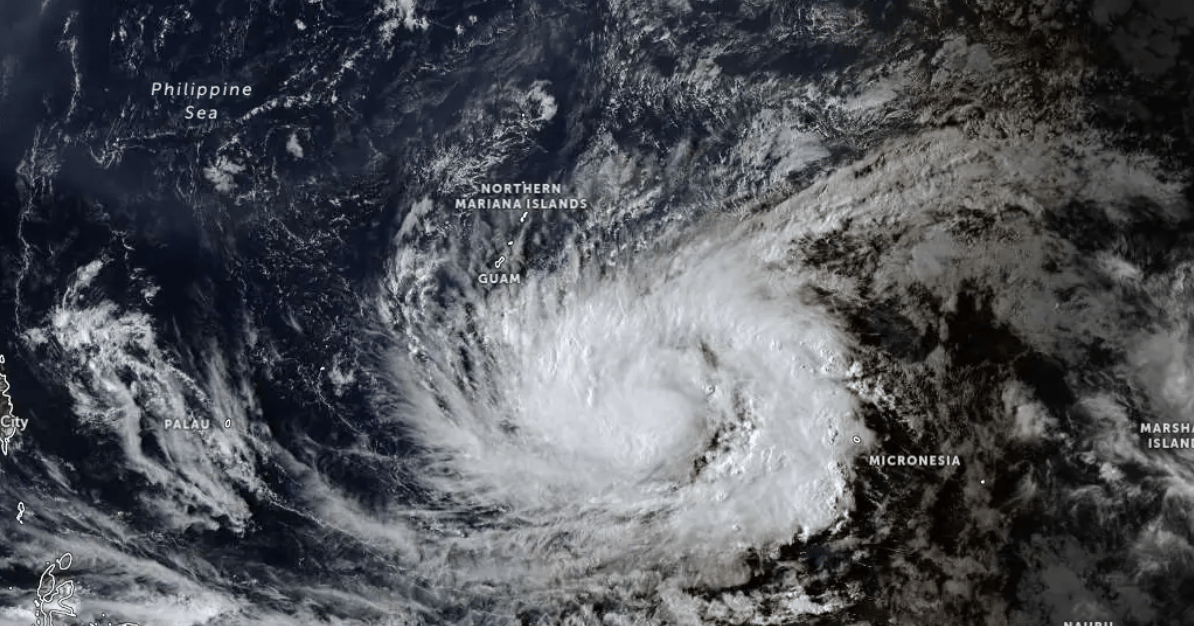
Typhoon Sinlaku Sunday evening 4/12, Eastern time
Boonie Tails
By Grace Keilbach
Super Typhoon Sinlaku
In 2018, a category five super typhoon with winds reaching up to 177mph touched down on U.S. soil, causing catastrophic destruction. People were left without power for months and many lost their homes. Despite being the strongest typhoon to hit the U.S. in recent history, you probably never even heard about it or the challenges that people were left with in its wake. Why? Because Super Typhoon Yutu hit the Northern Mariana Islands, a U.S. Commonwealth so far from the mainland that most citizens don’t even know it exists.
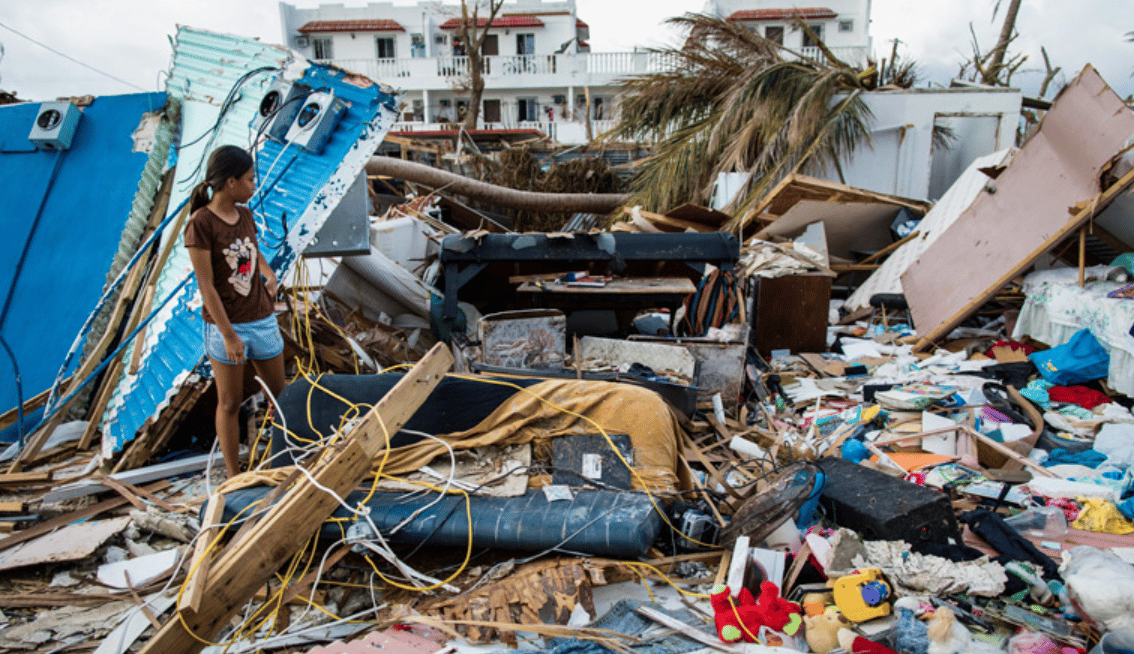
Destruction caused by Super Typhoon Yutu
A typhoon is a mature, rotating tropical cyclone that develops in the Northwestern Pacific Ocean, typically between May and November. The only thing that makes them different from a hurricane is location, typhoons west of the International Date Line, hurricanes to the east of it. Unless you’ve been in a super typhoon or any other serious natural disaster, it’s hard to fully understand what it's like. The calm and quiet before the storm is very real as the day before a typhoon hits; it is always sunny and beautiful. This of course slowly begins to shift. The flat water turns to waves as the clouds roll in and the wind picks up. In the beginning, you can see the trees blowing in the wind but as hours pass by, the only thing that can be seen through the window you really shouldn’t be standing next to is a sea of grey. If you are on anything but the first floor, you will feel the ground begin to sway while you listen to the wind that sounds more like a freight train passing by for hours on end. These storms are incredibly loud, making them extremely frightening for both animals and humans alike.
Although the storm itself can be deadly, the typhoon hitting is just the beginning of problems to come. Ranging from categories three to five, typhoons are known to cause catastrophic damage, primarily through widespread power grid failures, flooding, and infrastructure destruction. This damage often leads to long-term electricity blackouts, severe destruction of homes, widespread landslides, and contaminated water supplies.
With already struggling and outdated infrastructure combined with few resources, manpower, and funding to fix things, many people are left without power for months and the overall rebuilding process is slow. If you haven’t lived without power for weeks to months, there are many things you don’t think about being a problem…
In addition to it being hotter than a place we shall not name, making even sleep hard to come by, water often cuts out with the power meaning no showers or flushing the toilet. You also can not enter the ocean as it is now contaminated. With no power and extensive damage, schools are closed along with many businesses, leaving families at home with kids as they try to repair what they can with no incoming paychecks. Government issued tents are handed out to those whose homes are destroyed and you are left camping, whether it be in a tent or your flooded living room, with no end in sight.
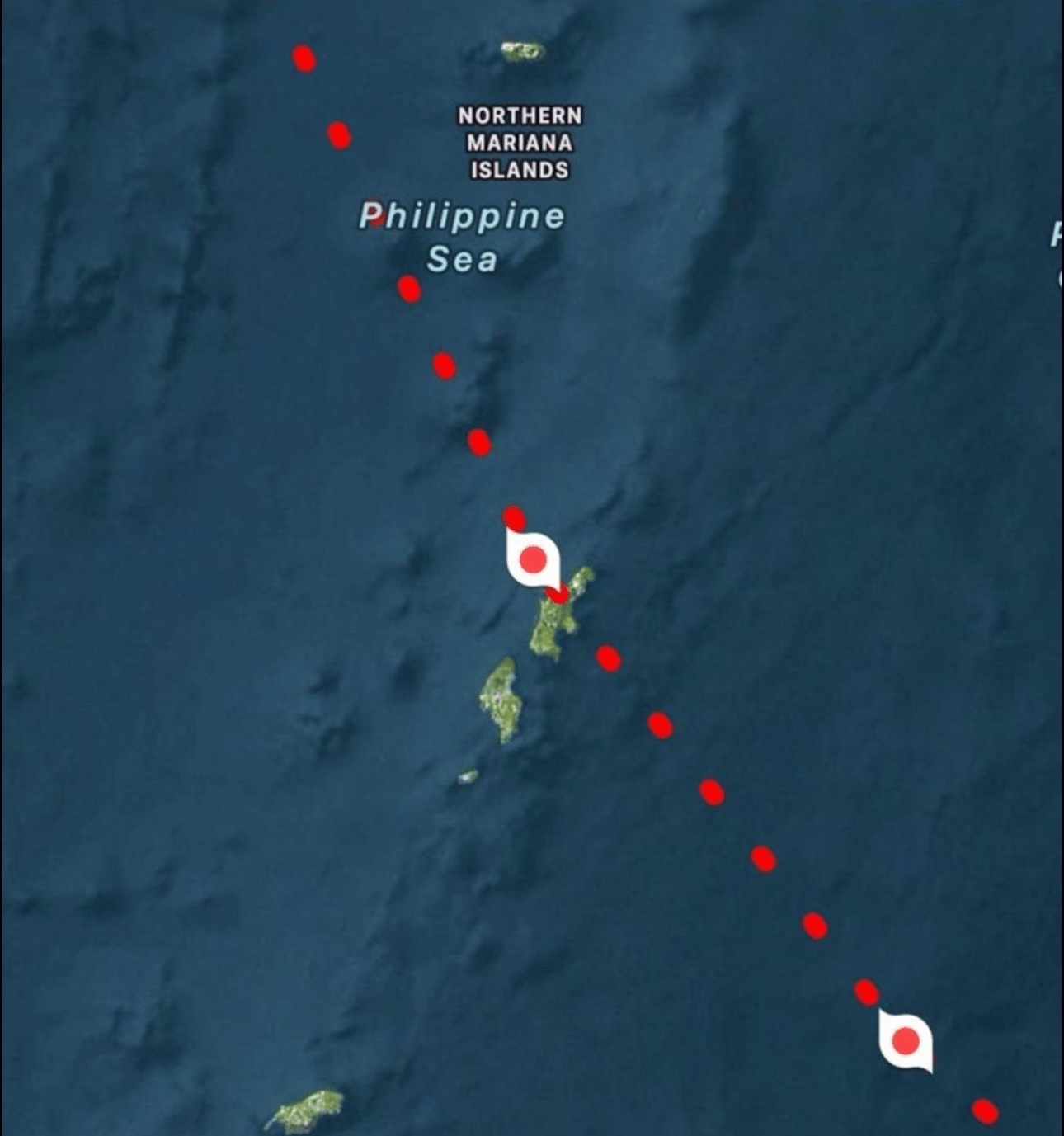
Typhoon Sinlaku’s projected course as of 4/12. That island it’s going right through is Saipan.
A super Typhoon will cause damage no matter where it hits, but when storms like this hit places like the CNMI that are out of sight and out of mind to the mainland, the effects are devastating and long lasting. As I write this newsletter Sunday evening, Typhoon Sinlaku is intensifying, with maximum sustained winds of 174 mph as it heads towards the CNMI and Guam. Currently at a category 4, residents are bracing for impact as everyone hopes for the best but prepares for the worst. Boonie Babies and Saipan Humane society have been working to support and urge the community to provide safety for their animals even if that means just cutting them loose so they have a fighting chance. As the Mayor’s shelter does not have windows and is at extreme risk for flooding, volunteers have reached out to them to assist with fostering and creating a plan to ensure the animals there are safe as well.
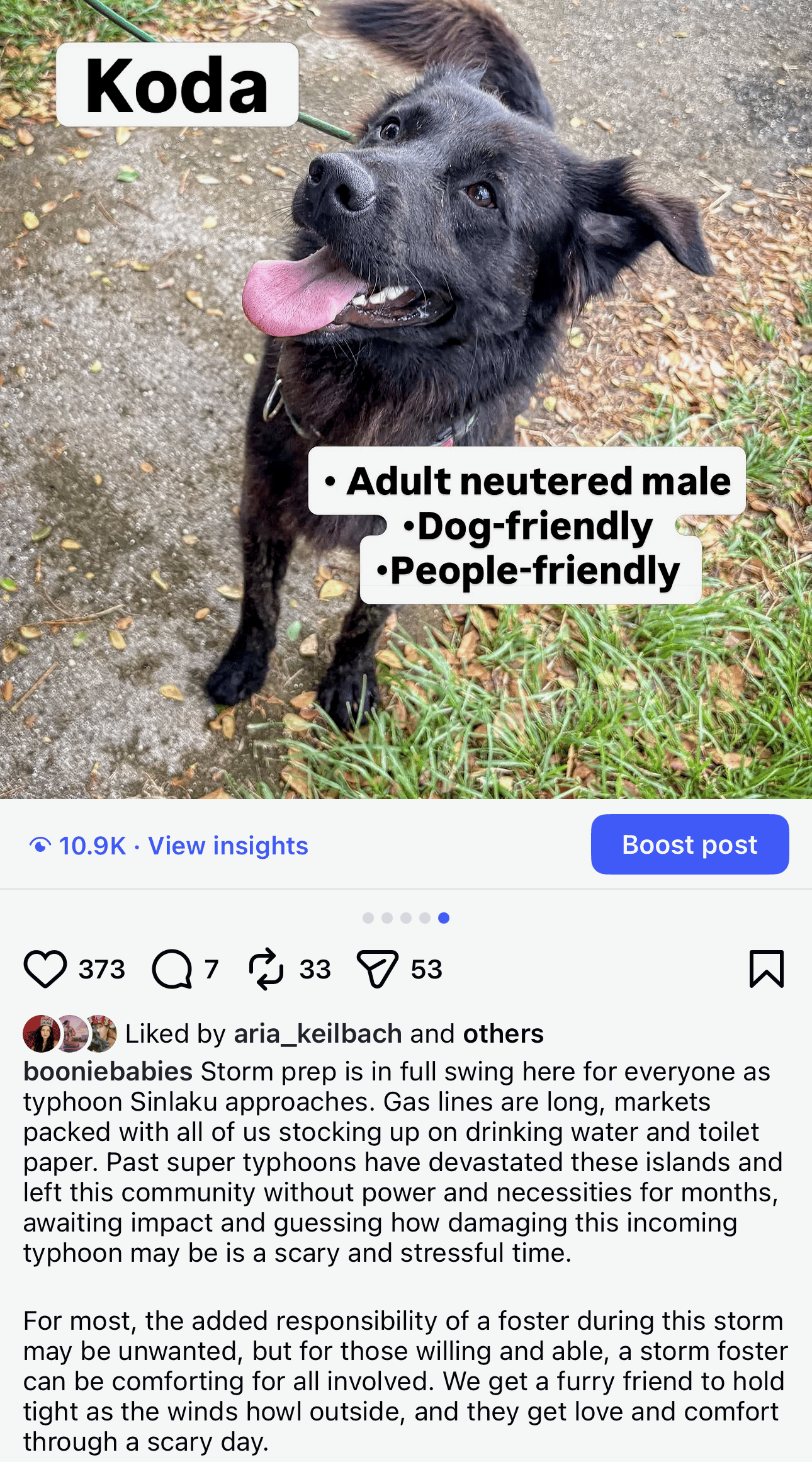
Boonie Babies storm foster post featuring our adoptable dog Koda
If a storm like this was approaching the mainland, it would be front page news, but because it’s hitting a Commonwealth, this will likely be the only report of Typhoon Sinlaku you see. Our community deserves to be seen and more importantly, assisted in its time of need. We are still hoping that this may turn out to be a “banana storm”, only damaging the banana trees, but there is no way of knowing until it makes landfall or passes by without making a direct hit.
If you are interested and able to help, please checkout our posts in the days to come as we will be sharing how to donate to storm relief efforts if necessary. Want to make sure community members are able to care for their Boonies during this time? Donate directly to Boonie Babies via PayPal, @[email protected], with the note “Typhoon Sinlaku”. All funds will support Boonies in need, mainly through dog food or whatever else pet owners may need assistance with in the coming days.
Boonie Tails is free to read. But if you liked this post, support Boonie Babies and this newsletter by pledging a monthly or annual donation. Thank you for reading and we’ll see you next week!
Reply